sales@masonsmillandlumber.com

Green Building Materials

At Mason’s Mill & Lumber Co., green building materials aren’t a side category — they’re a core part of how we help architects, builders, designers, and homeowners spec real wood and wood-alternative products that hold up outdoors, indoors, and everywhere in between. Our green catalog includes FSC®-certified sustainably sourced lumber, modified wood from Accoya®, Kebony®, and Thermory®. Every product is chosen for the same reason: it lasts, it’s honest about how it’s made, and it lets you build responsibly without giving up performance or looks.

What Counts as a "Green" Building Material?

A green building material is one that reduces environmental impact across its full life — how it’s harvested or manufactured, how long it performs, and what happens to it at end of life. The products on this page qualify in one or more of these ways:


      • Sustainably sourced. FSC®-certified or grown in well-managed forests where new trees replace what’s cut.

      • Chemically clean. Free from phenol, formaldehyde, and harmful VOCs — safe for interior and exterior use.

      • Modified for longevity. Thermal or bio-based modification extends service life to 25–50 years, so boards are replaced less often.

      • Tree-free or upcycled. Products like ACRE™ are made from agricultural byproducts that would otherwise be discarded.

      • LEED and Living Building Challenge eligible. FSC®-certified wood contributes to green building rating systems including LEED v4.1, LEED v5, and BREEAM.

If you’re speccing to hit a sustainability target — a LEED credit, a client mandate, or your own build standard — we can help you match the right material to the requirement.

Browse Our Green Building Materials

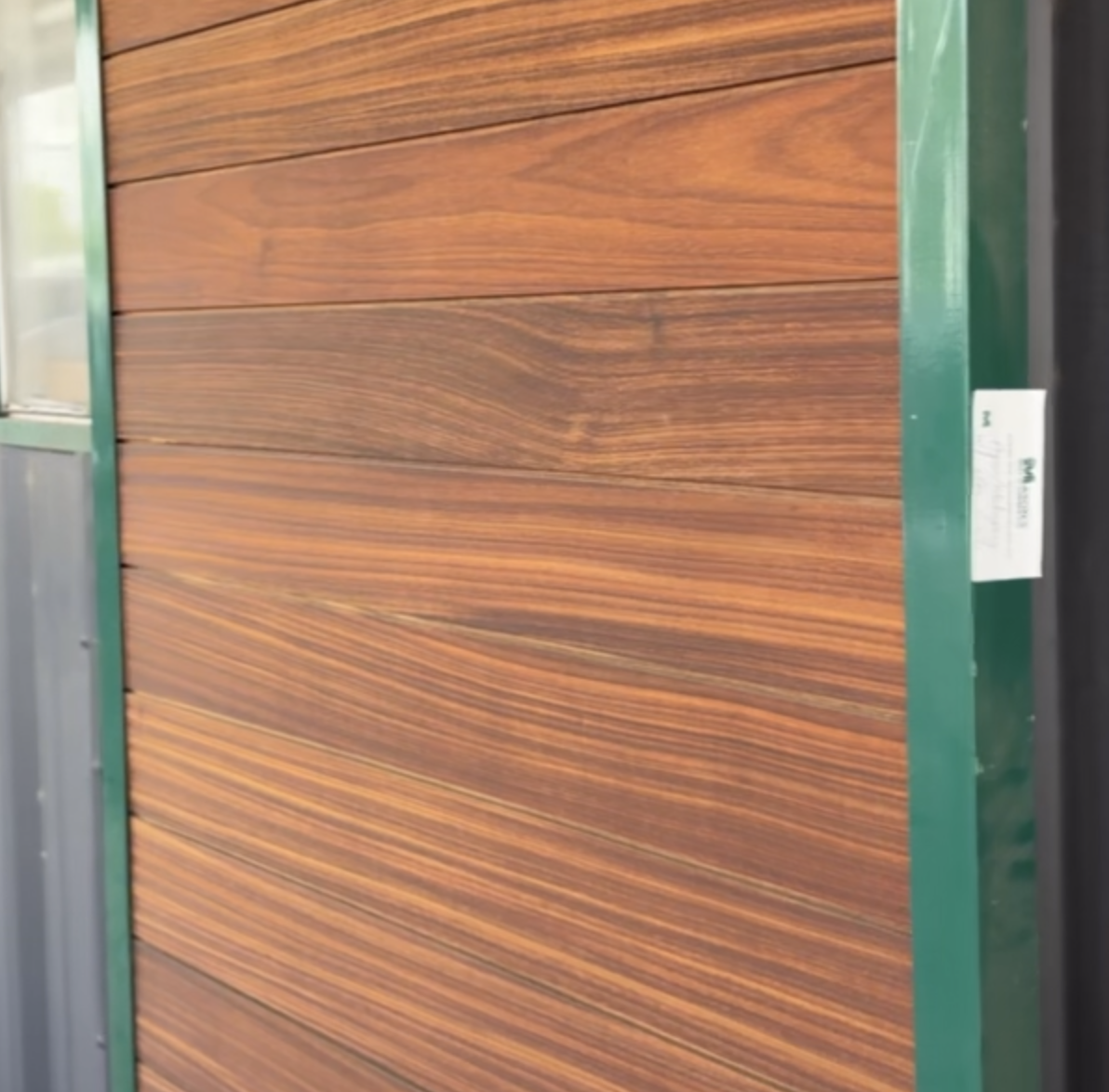
Ayous / African Mahogany — Cutek Extreme Clear Finish

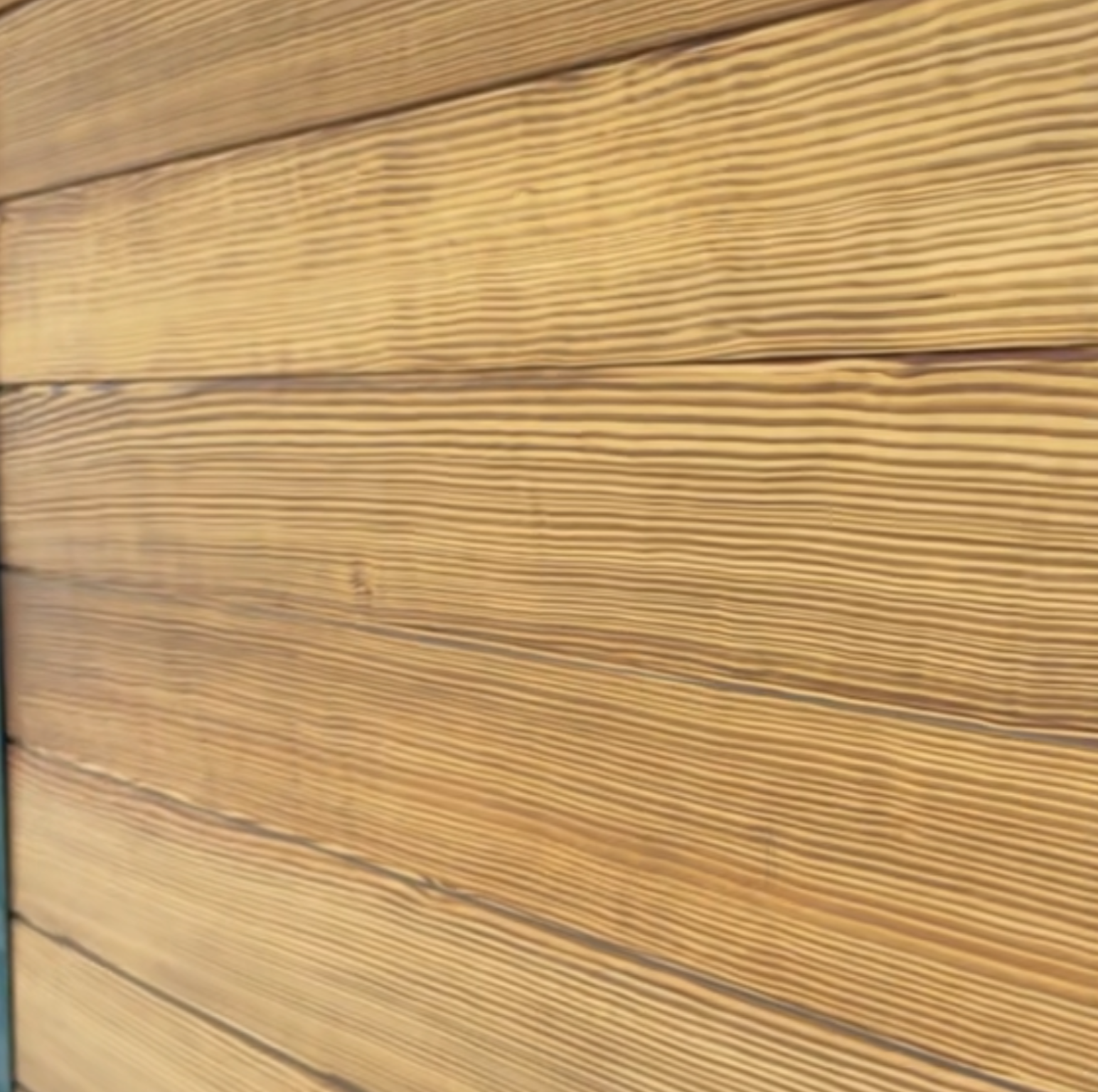
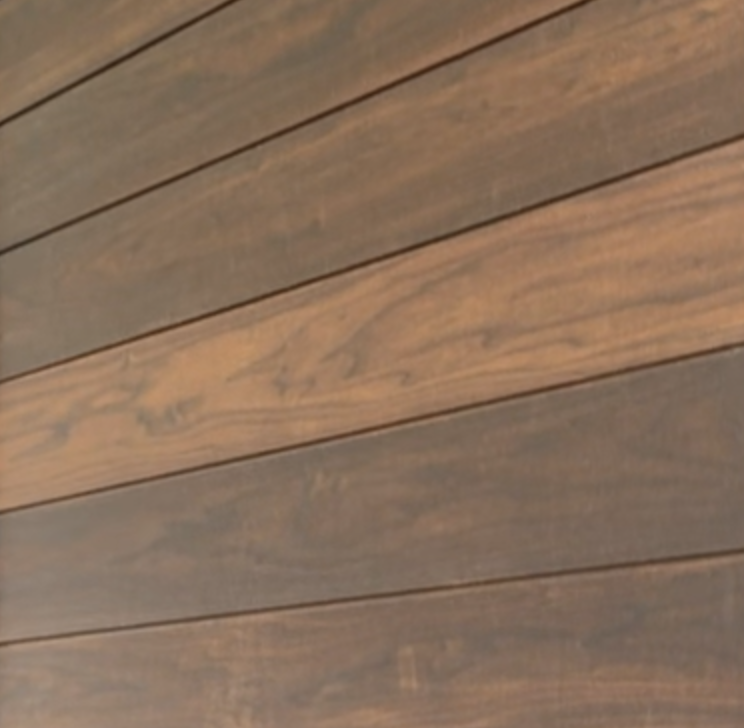
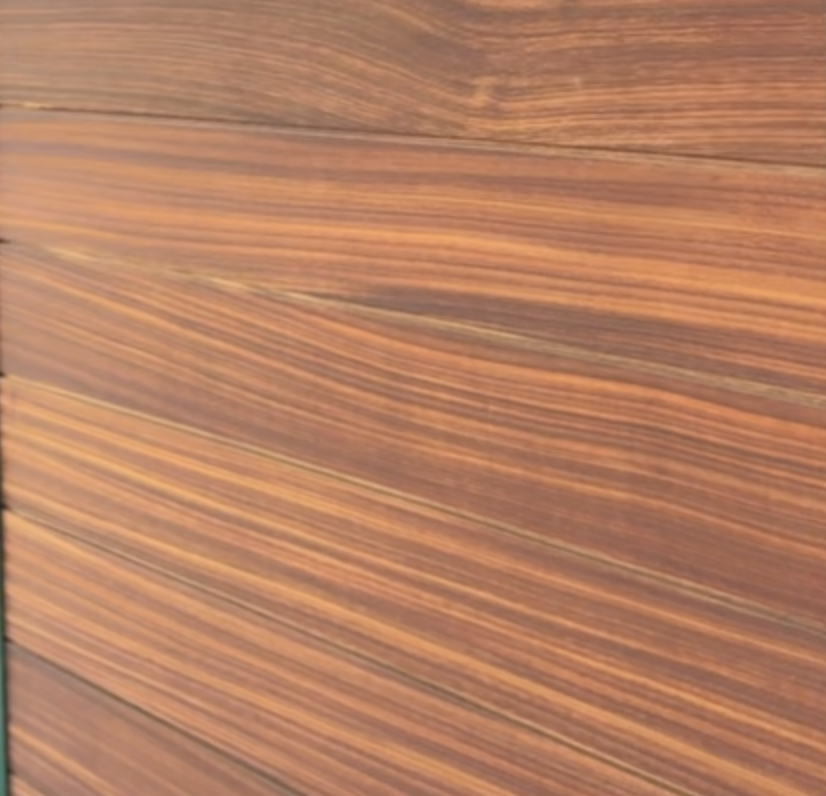
Ayous (Triplochiton scleroxylon), also known as Obeche, African Whitewood, Samba, or Wawa, is a lightweight tropical hardwood native to the forests of West and Central Africa. In its natural, unmodified state, Ayous has a pale cream to light yellow heartwood with a straight to slightly interlocked grain and a medium-to-coarse texture with good natural luster. It's frequently grouped with — and sold alongside — African Mahogany because of its similar workability, dimensional characteristics, and the way it accepts stains and finishes to achieve rich, mahogany-like tones.

Ayous is prized for several reasons that make it well-suited to architectural and millwork applications: it's remarkably lightweight (roughly 24 lbs/ft³), which eases handling for vertical siding, ceiling, and overhead installations; it has low shrinkage and good dimensional behavior once properly dried; and its clear, knot-free character grades produce a smooth, uniform surface ideal for high-visibility finish work. In its natural state, Ayous is considered non-durable to moderately durable against decay, which is why exterior applications require a quality penetrating finish to protect the wood and extend its service life.

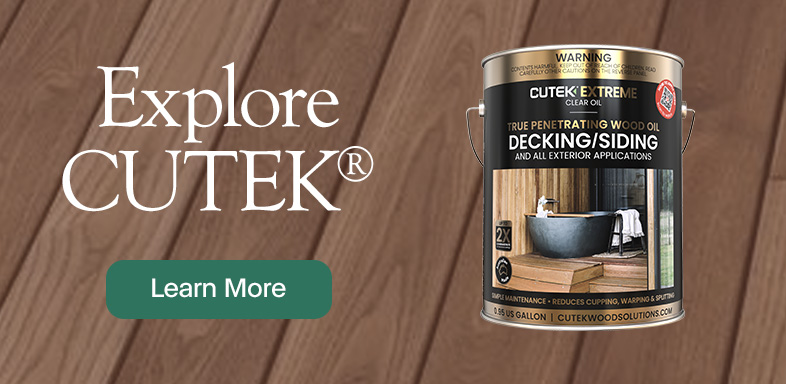
Each board is finished with Cutek Extreme Clear, a penetrating oil specifically formulated to stabilize exterior wood from within. Unlike surface coatings that sit on top of the board and eventually peel, crack, or flake, Cutek carries its oils deep into the wood fibers where they work continuously to reduce moisture movement — the primary cause of cupping, checking, warping, and end-splitting. This is especially important for a species like Ayous, whose natural durability benefits significantly from a stabilizing oil. Because Cutek penetrates rather than films, maintenance requires no sanding or stripping — just clean the surface and reapply when it looks dry. The clear formulation adds no pigment, allowing the Ayous's natural cream-to-honey tone to show through initially before gradually silvering to a soft gray patina if left unmaintained with a colortone.

Because Ayous can react with iron and galvanized fasteners (causing black staining), stainless steel fixings are required for installation. Pre-drilling is also recommended, as the wood can be brittle.

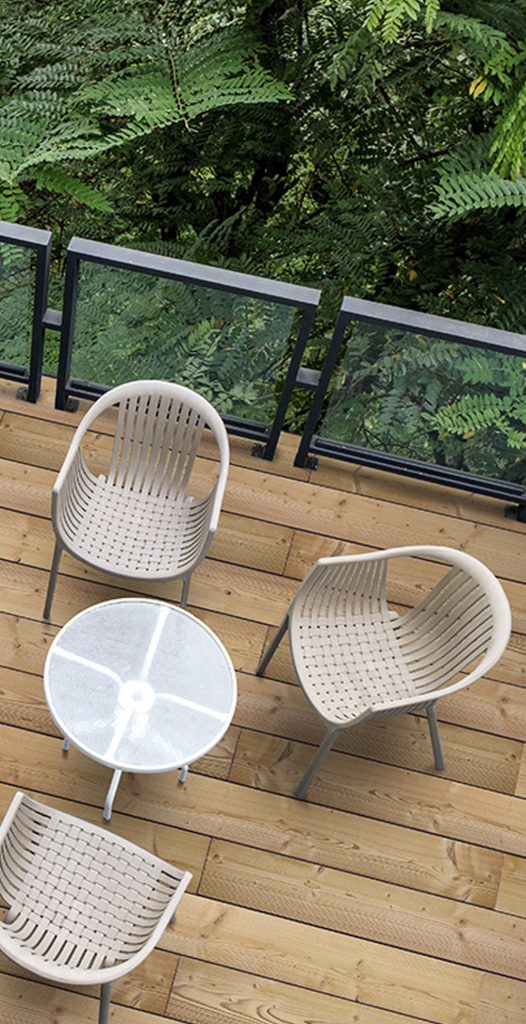
Ideal for architectural siding, feature walls, soffits, porch ceilings, interior paneling, sauna applications, and covered outdoor living areas where a lightweight, workable hardwood with a refined appearance is desired.

Specifications

Spec Detail
Species Ayous (Triplochiton scleroxylon)
Also Known As Obeche, African Whitewood, Samba, Wawa; often sold alongside African Mahogany
Origin West and Central Africa
Modification None — natural, kiln-dried
Finish Cutek Extreme Clear (penetrating oil)
Finish Type Oil-based, non-film-forming
Color Natural pale cream to light yellow; darkens slightly with age; accepts stains beautifully to achieve mahogany-like tones
Grade Clear grade available; virtually knot-free
Grain / Texture Straight to slightly interlocked grain; medium-to-coarse texture; good natural luster
Janka Hardness ~440 lbf
Average Dried Weight 23.8 lbs/ft³ (380 kg/m³) — lightweight
Specific Gravity 0.32 (basic), 0.38 (12% MC)
Modulus of Rupture 8,680 lbf/in²
Elastic Modulus 934,000 lbf/in²
Shrinkage Radial 3.1%, Tangential 5.3%, Volumetric 8.7% (T/R ratio 1.7)
Natural Durability Non-durable to moderately durable — finish required for exterior use
Workability Machines and finishes well; sands smoothly; accepts stains and oils evenly
Applications Exterior siding (with finish), feature walls, soffits, porch ceilings, interior paneling, sauna walls/ceilings, millwork, trim
Fixings Stainless steel required — Ayous reacts with iron and galvanized fasteners; pre-drilling recommended
Maintenance Clean and re-oil with Cutek Extreme as needed — no sanding or stripping required
Sustainability FSC-certified options available

  • Desc.
  • Sizes
  • Quote
Categories: Display Products,Mill Applied Finish
Sub-Categories:
Tags: exterior siding,cutek clear,cutek extreme,ayous,obeche,african mahogany,african whitewood,penetrating oil finish,interior paneling,sauna wood,tropical hardwood

Quote

    Your Name (required)

    Your Email (required)

    Zip Code (required)

    Product Name

    Please provide more project details.

    Please prove you are human by selecting the tree.

    Our Green Product Lines

    Mason’s Mill stocks the three leading names in modified wood — Accoya®, Kebony®, and Thermory® — each engineered to outlast traditional lumber without the chemicals of pressure-treated pine or the environmental cost of tropical hardwoods. Accoya® starts with fast-growing, FSC®-certified Radiata Pine and puts it through a non-toxic acetylation process that permanently changes the wood at the cell level, delivering a Class 1 durable board backed by a 50-year above-ground warranty (25 years in ground or freshwater) — ideal for cladding, decking, siding, windows, and doors. Kebony® permanently modifies sustainably sourced softwood using furfuryl alcohol, a bio-based liquid made from agricultural crop waste, producing boards with the hardness and stability of tropical hardwoods and a 30-year warranty on Character and Clear grades. Thermory® uses only heat and steam — no chemicals — to reduce moisture and rearrange the cell structure, yielding boards 7x less likely to move than untreated wood; Mason’s Mill operates the Thermory USA Central Warehouse in Houston and holds the largest Thermory® inventory in the country across decking, cladding, siding, flooring, slatwall, and rough lumber.


    Beyond these three brands, Mason’s Mill sources FSC®-certified rough lumber and millwork across a range of species for custom milling, moulding, cabinetry, and specialty projects. FSC® Chain-of-Custody tracks every board from forest to job site, giving architects and builders the documentation they need for LEED, BREEAM, and Living Building Challenge submissions.

    Why Green Building Materials Matter

    Green materials aren’t just a marketing angle anymore — they’re a spec requirement on a growing share of commercial and residential projects. Reasons architects, builders, and owners are choosing sustainable materials right now:

      • LEED v5 MRc4 now uses a Multi-Attribute Scoring methodology that ranks FSC®-certified building products the highest of any wood certification.

      • BREEAM 2018 and LEED v4.1 both reward third-party-verified EPDs, LCAs, and FSC® Chain-of-Custody documentation.

      • Modified wood products cut lifecycle impact because boards last 2–3x longer than untreated softwood — fewer replacements, less waste, less carbon over the life of the building.

      • Tree-free composites like ACRE™ divert agricultural waste from landfills and remove tropical hardwood pressure from the supply chain.

      • Chemical-free processes (thermal modification, acetylation, furfurylation) produce boards that are safe to handle, non-toxic to install, and safe to dispose of.

    For homeowners, the payoff is a home that holds its finish for decades with minimal upkeep. For architects and builders, it’s a documented, defensible path to hitting sustainability targets on the drawing.

    Frequently Asked Questions

    It depends on the project. Accoya® has the longest above-ground warranty (50 years) and starts with FSC®-certified Radiata Pine. Kebony® uses bio-based furfuryl alcohol derived from agricultural crop waste. Thermory® is completely chemical-free, modified using only heat and steam. All three are strong sustainable choices — we're happy to help you pick the right one based on species, application, budget, and the look you're after.

    Modified wood is real wood that has been permanently altered — either chemically (Accoya®, Kebony®) or thermally (Thermory®) — to resist rot, warping, and insects without the toxic preservatives found in pressure-treated lumber. It's considered a green building material because it starts with sustainably sourced or FSC®-certified species, uses non-toxic processes, and lasts 2–3x longer than untreated softwood — meaning fewer replacements, less waste, and a lower lifetime carbon footprint.

    No. Pressure-treated lumber uses chemical preservatives forced into the wood under pressure. Thermally modified wood — like Thermory® — uses only heat and steam, with no chemicals added. The process reduces moisture to near zero and rearranges the wood's cell structure so it naturally resists rot, warping, and insects. Safer to handle, safer to install, and safer to dispose of at end of life.

    Yes. FSC®-certified wood contributes to LEED v4.1 and LEED v5 credits — including the new MRc4 Multi-Attribute Scoring in v5, where FSC® ranks the highest of any wood certification. Modified wood from Accoya®, Kebony®, and Thermory® with published EPDs also contributes to LEED and BREEAM credits, as well as Living Building Challenge submissions. Ask us for the current documentation on any product you're speccing.


    Accoya® carries a 50-year warranty above ground and 25 years in ground or freshwater. Kebony® carries a 30-year warranty on Character and Clear grades. Thermory® decking and cladding carry a 25+ year rot-resistance warranty. In real-world use, service life often exceeds the warranty period — especially on properly detailed exterior installations.


    All three are modified wood, but the process is different. Accoya® uses acetylation — a non-toxic chemical process — on FSC®-certified Radiata Pine, delivering the longest warranty and best dimensional stability. Kebony® uses furfurylation — a bio-based process using agricultural waste — on sustainably sourced softwood to mimic the hardness of tropical hardwoods. Thermory® uses only heat and steam — no chemicals at all — on species like Ash, Pine, and Spruce. Different processes, different price points, different aesthetics — all excellent green options.


    Yes. Nearly every product on this page has a $10 sample available through our Sample Shop, and the sample cost is credited back on your full order. It's the easiest way to see, touch, and finish-test the material before you spec it.

    Yes. Accoya®, Kebony®, and Thermory® are all non-toxic and safe for indoor applications. Thermory® is a popular choice for interior flooring, slatwall, and biophilic-design feature walls. Accoya® is used for windows, doors, and interior millwork. Kebony® is used for flooring and interior cladding. None off-gas harmful VOCs.

    Request a Green Building
    Materials Quote

      Subscribe And Enjoy!

      Product Updates,
      Special Sales & More!

      You have been successfully Subscribed! Ops! Something went wrong, please try again.
      I don't want to see this anymore.

      Subscribe And Enjoy!

      Product Updates, Special Sales & More!

      Stay informed with the latest from
      Mason's Mill & Lumber Co.

      You have been successfully Subscribed! Ops! Something went wrong, please try again.
      I don't want to see this offer anymore