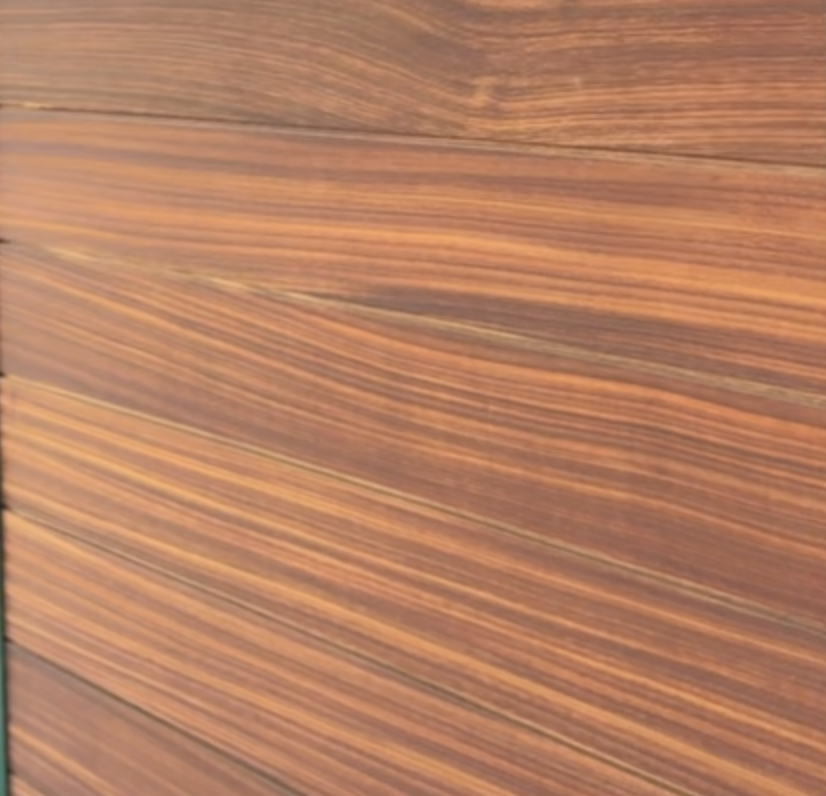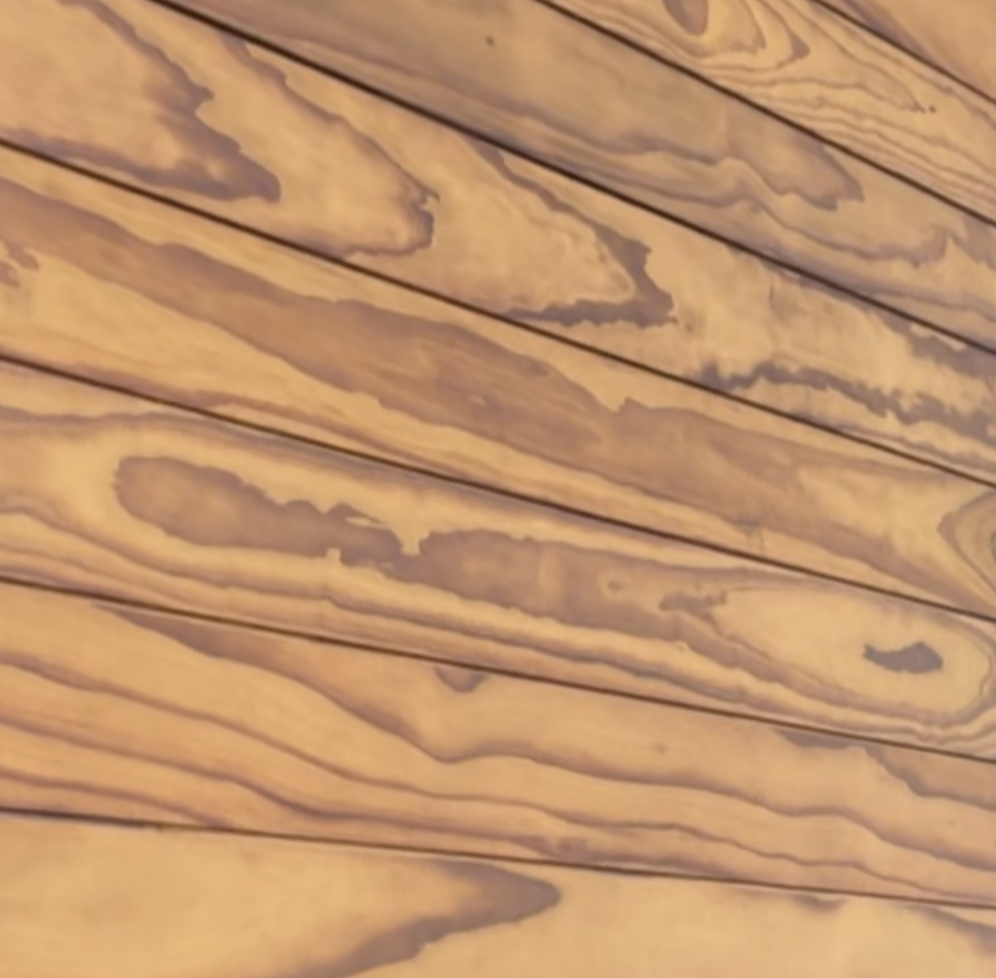
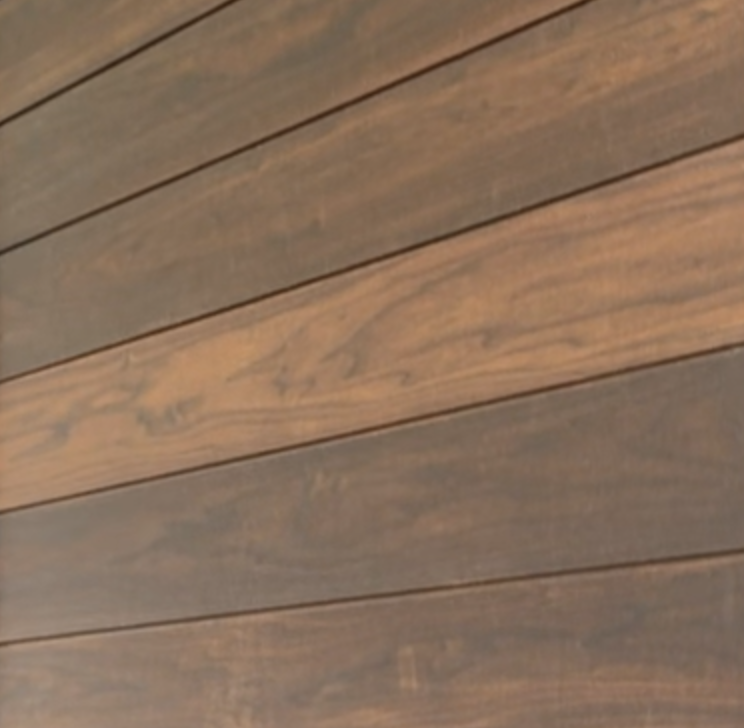
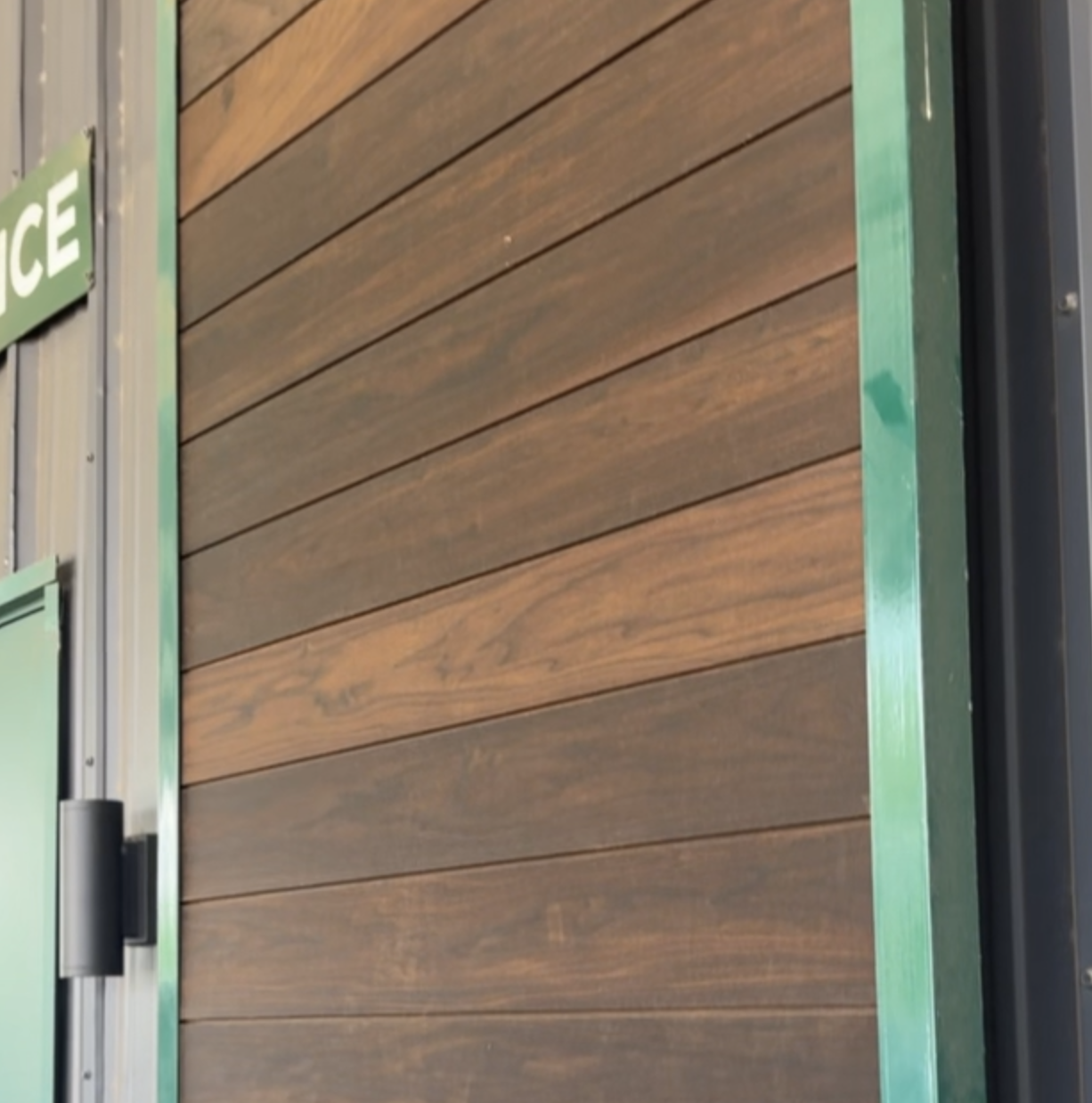
Thermac Poplar is a thermally modified Appalachian hardwood produced by Bingaman & Son Lumber from native Pennsylvania yellow poplar. Using only heat and steam — no chemicals, plastics, or additives — the wood is heated in a low-oxygen environment to fundamentally alter its cell structure. This process removes the sugars and moisture that fungi and insects need to survive, while permanently reducing the wood's ability to absorb water. The result is a stable, rot-resistant hardwood with a warm, chocolate-brown color that runs consistently through the entire board, not just the surface.
Yellow poplar is particularly well-suited to thermal modification: it's a domestically abundant, fast-growing hardwood that emerges from the process with excellent dimensional stability, a smooth grain, and a rich color that rivals more exotic species. Independent testing on thermally modified yellow poplar has demonstrated Durability Class 1 ("very durable") performance against wood-destroying fungi, placing it in the same durability tier as many tropical hardwoods.
Each board is finished with Cutek Extreme Clear, a penetrating oil that migrates deep into the wood fibers rather than forming a surface film. Cutek's core function is dimensional stabilization — it works from inside the board to slow moisture movement, which is what causes cupping, checking, and end-splitting in exterior wood. Because the finish penetrates rather than coats, it cannot peel or flake, and maintenance requires no sanding or stripping — just clean the surface and re-apply when it looks dry. The clear formulation adds no pigment, so the poplar's natural thermally-modified brown will show through initially and gradually transition to a silver-gray patina if left unmaintained with a colortone.
Ideal for exterior siding, soffits, porch ceilings, cladding, and covered outdoor applications where a domestic hardwood with contemporary durability is desired.
| Spec | Detail |
|---|---|
| Species | Yellow Poplar (Liriodendron tulipifera) — thermally modified |
| Product Line | Thermac by Bingaman & Son Lumber |
| Origin | Appalachian / Pennsylvania hardwood |
| Modification | Thermal modification — heat and steam only, no chemicals |
| Finish | Cutek Extreme Clear (penetrating oil) |
| Finish Type | Oil-based, non-film-forming |
| Color | Rich chocolate brown, consistent through the full board |
| Weathering | Silvers to gray patina over time if not maintained with colortone |
| Durability Class | Class 1 ("very durable") when tested per EN 350 standards |
| Janka Hardness | ~500–615 lbf (thermally modified yellow poplar) |
| Dimensional Stability | Significantly improved vs. untreated poplar; tangential/radial movement ~1.1–1.2% |
| Service Life | Designed for up to 25 years in exterior applications |
| Applications | Exterior siding, soffits, porch ceilings, cladding, covered outdoor living, trim |
| Maintenance | Clean and re-oil with Cutek Extreme as needed — no sanding or stripping required |
| Sustainability | Domestic, fast-growing hardwood; chemical-free modification process |