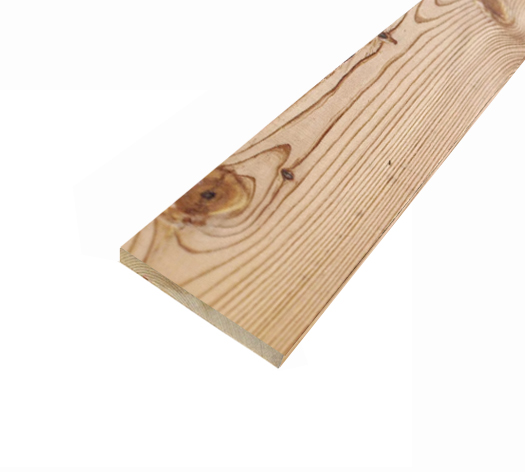


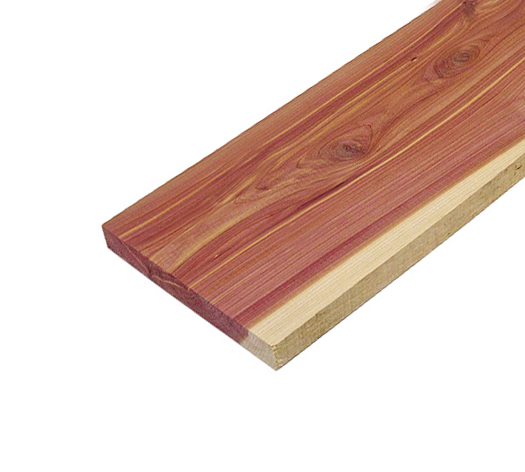
Regarded as excellent in resistance to both decay and insect attack, aromatic red cedar is frequently used for fence posts used in direct ground contact with no pre-treating of the wood.
Overall, aromatic red cedar is easy to work, notwithstanding any knots or irregularities present in the wood. It reportedly has a high silica content, which can dull cutters. Aromatic red cedar glues and finishes well, though in many applications, the wood is left unfinished to preserve its aromatic properties.
Cedar has a distinct and tell-tale scent: the wood is commonly used in closets and chests to repel moths and other insects. Though eastern red cedar trees are widely distributed throughout the eastern half of the United States, it is a very slow-growing species, and most trees harvested tend to be fairly small in diameter. Because of this, aromatic red cedar boards tend to be knotty and narrow.
In rustic or knotty grades of lumber, there will be a percentage of degrade during the milling process. Some knots may shake lose and/or fall out during the milling process. Mason’s Mill is not liable for these defects in moldings produced from knotty grades of lumber.
Mason’s Mill and Lumber will not be responsible or issue a credit for any cup, warp, twist or splitting that occurs in any custom cut Fir or Cedar boards or beams. These issues can be present in material cut from larger beams and timbers and need to be accounted for by the buyer when determining if Fir or Cedar is appropriate for the intended application. Cedar and Fir products will typically have knots.