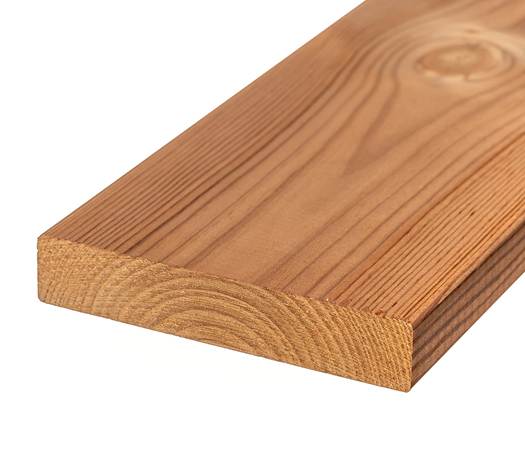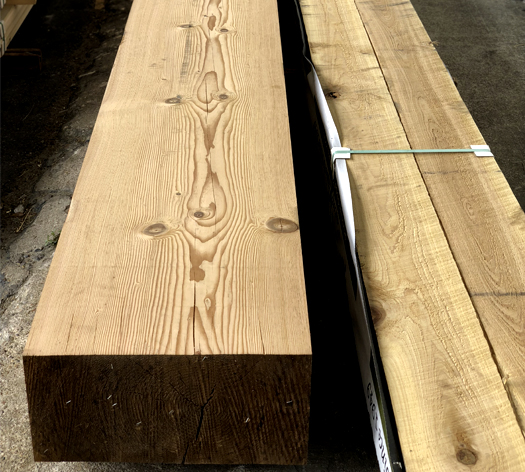
Also known as White Pine or Moulding Pine, Ponderosa Pine is technically classified as a yellow (hard) pine, it shares many characteristics with white (soft) pines, having a considerably lower density than the yellow pine species found in the eastern United States. Ponderosa Pine has a wide, whitish to pale yellow sapwood, with a darker heartwood that is deep yellow to reddish-brown or orange-brown and is much heavier than the sapwood. The grain is typically straight and even, and is often characterized by many knots. Typical uses include rustic furniture, window frames, doors, kitchen furniture, building, boxes, dowels, cabinets, and general woodworking.
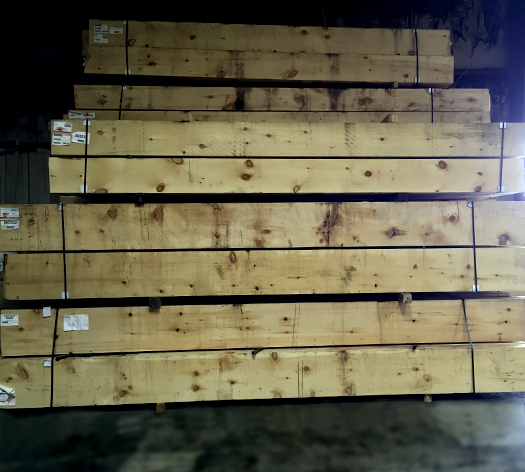
In rustic or knotty grades of lumber, there will be a percentage of degrade during the milling process. Some knots may shake lose and/or fall out during the milling process. Mason’s Mill is not liable for these defects in moldings produced from knotty grades of lumber.
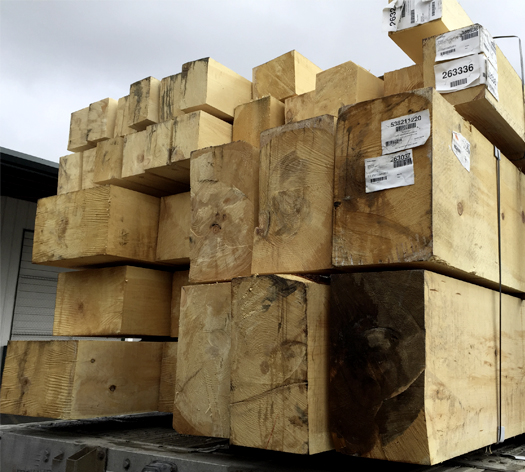
Green beams will typically contain checks, splits and knots. These are natural defects and are normal for these products. Beams can not be returned.