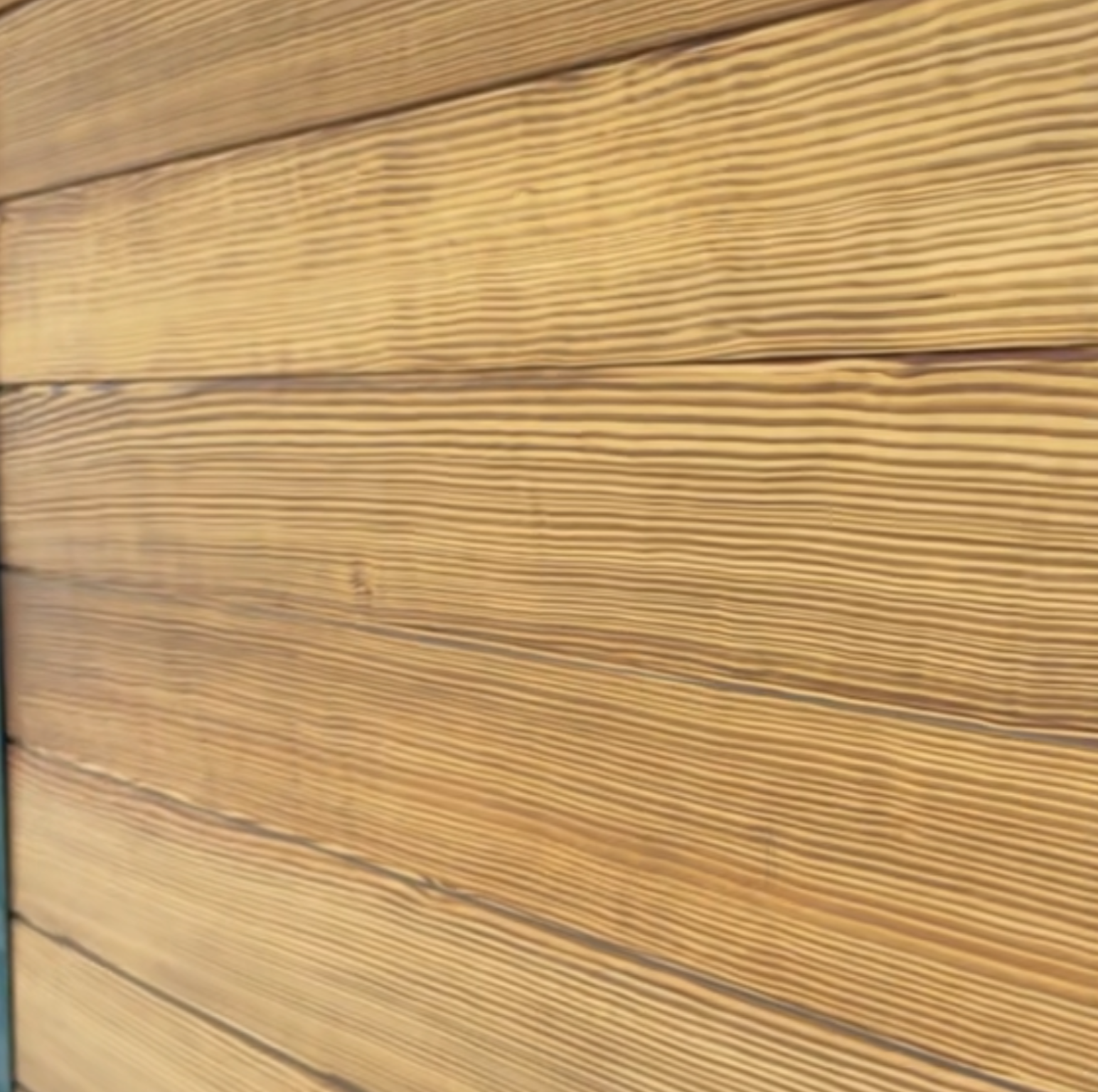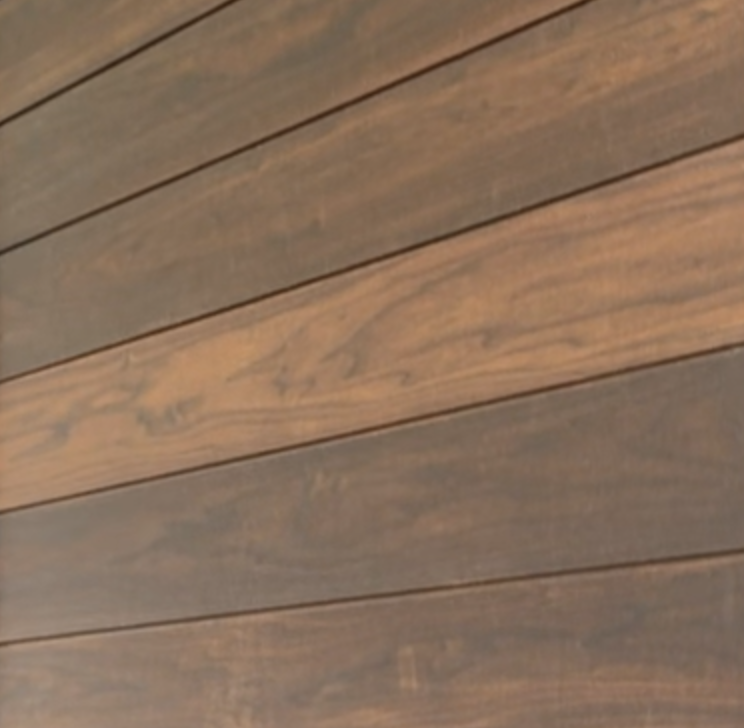
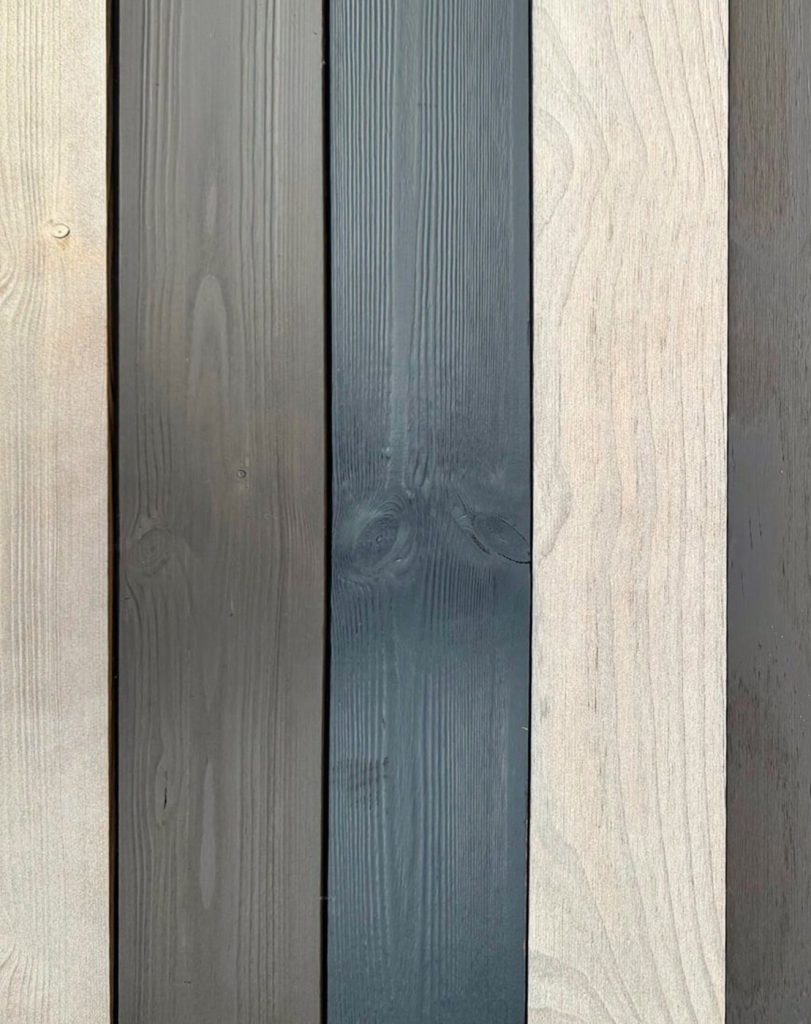
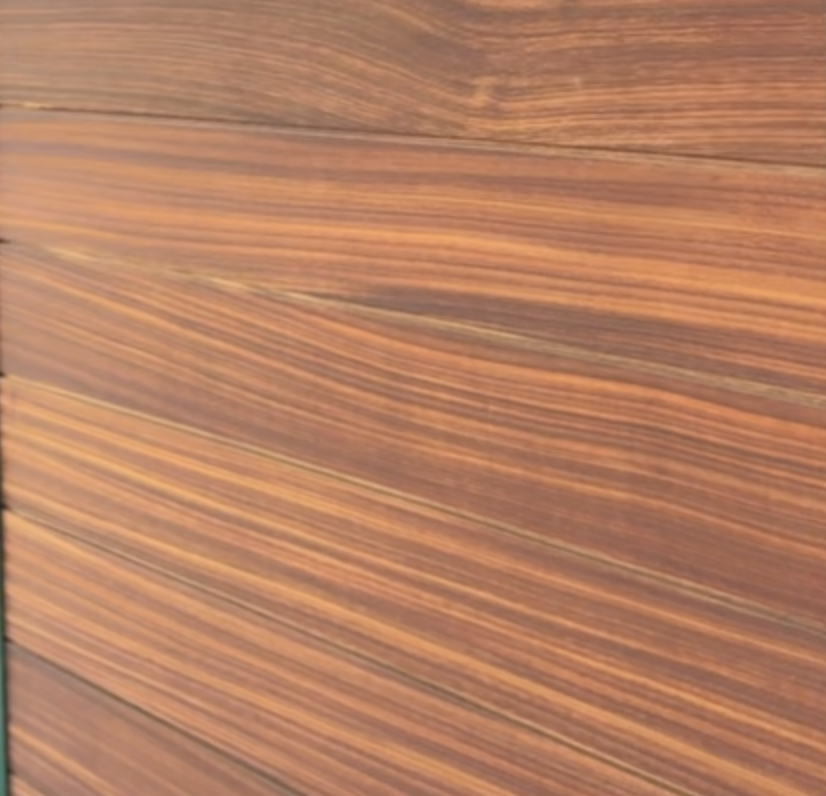
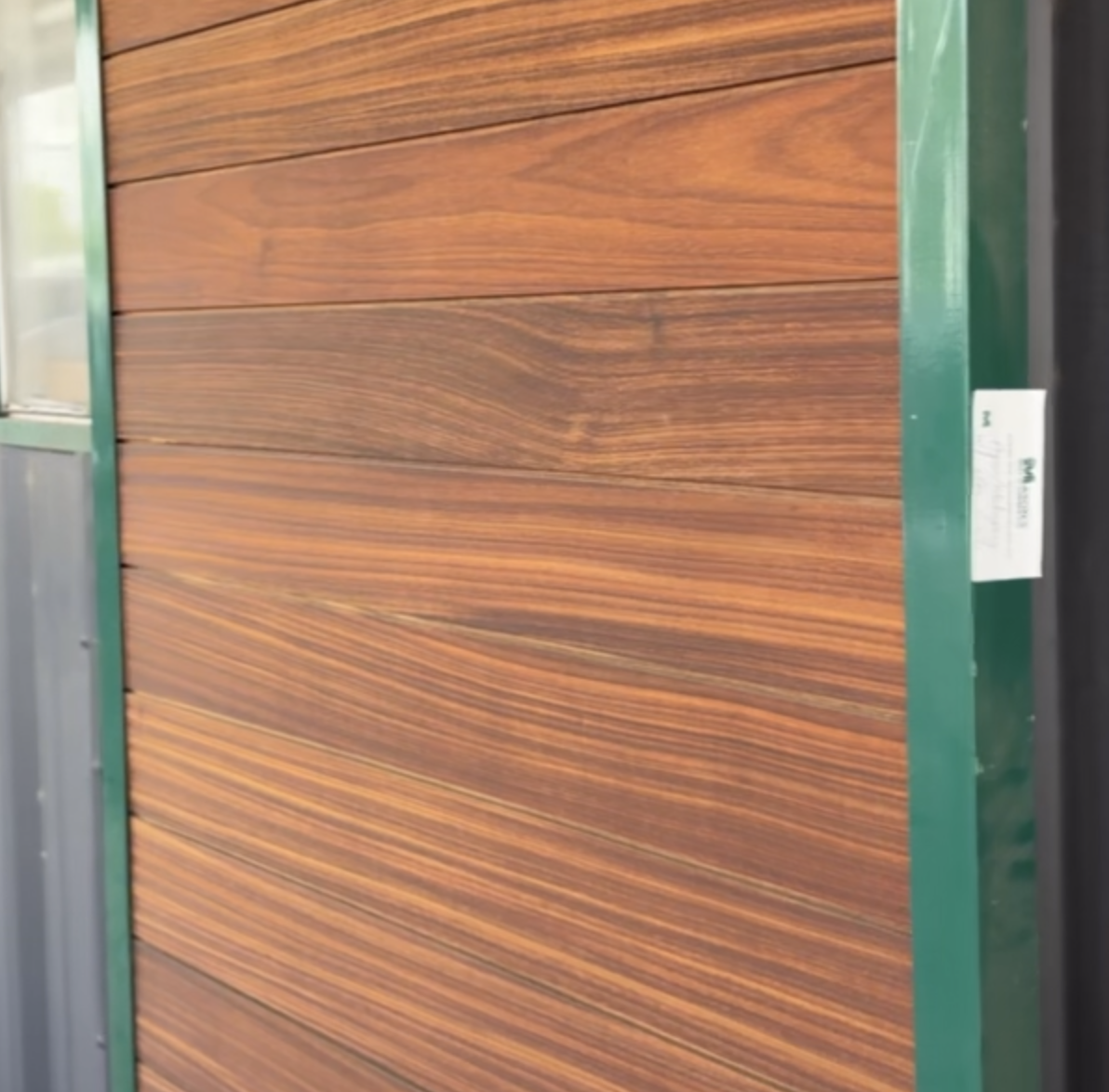
Ayous (Triplochiton scleroxylon), also known as Obeche, African Whitewood, Samba, or Wawa, is a lightweight tropical hardwood native to the forests of West and Central Africa. In its natural, unmodified state, Ayous has a pale cream to light yellow heartwood with a straight to slightly interlocked grain and a medium-to-coarse texture with good natural luster. It's frequently grouped with — and sold alongside — African Mahogany because of its similar workability, dimensional characteristics, and the way it accepts stains and finishes to achieve rich, mahogany-like tones.
Ayous is prized for several reasons that make it well-suited to architectural and millwork applications: it's remarkably lightweight (roughly 24 lbs/ft³), which eases handling for vertical siding, ceiling, and overhead installations; it has low shrinkage and good dimensional behavior once properly dried; and its clear, knot-free character grades produce a smooth, uniform surface ideal for high-visibility finish work. In its natural state, Ayous is considered non-durable to moderately durable against decay, which is why exterior applications require a quality penetrating finish to protect the wood and extend its service life.
Each board is finished with CUTEK® Extreme Clear, a penetrating oil specifically formulated to stabilize exterior wood from within. Unlike surface coatings that sit on top of the board and eventually peel, crack, or flake, CUTEK® carries its oils deep into the wood fibers where they work continuously to reduce moisture movement — the primary cause of cupping, checking, warping, and end-splitting. This is especially important for a species like Ayous, whose natural durability benefits significantly from a stabilizing oil. Because Cutek penetrates rather than films, maintenance requires no sanding or stripping — just clean the surface and reapply when it looks dry. The clear formulation adds no pigment, allowing the Ayous's natural cream-to-honey tone to show through initially before gradually silvering to a soft gray patina if left unmaintained with a colortone.
Because Ayous can react with iron and galvanized fasteners (causing black staining), stainless steel fixings are required for installation. Pre-drilling is also recommended, as the wood can be brittle.
Ideal for architectural siding, feature walls, soffits, porch ceilings, interior paneling, sauna applications, and covered outdoor living areas where a lightweight, workable hardwood with a refined appearance is desired.
| Spec | Detail |
|---|---|
| Species | Ayous (Triplochiton scleroxylon) |
| Also Known As | Obeche, African Whitewood, Samba, Wawa; often sold alongside African Mahogany |
| Origin | West and Central Africa |
| Modification | None — natural, kiln-dried |
| Finish | Cutek Extreme Clear (penetrating oil) |
| Finish Type | Oil-based, non-film-forming |
| Color | Natural pale cream to light yellow; darkens slightly with age; accepts stains beautifully to achieve mahogany-like tones |
| Grade | Clear grade available; virtually knot-free |
| Grain / Texture | Straight to slightly interlocked grain; medium-to-coarse texture; good natural luster |
| Janka Hardness | ~440 lbf |
| Average Dried Weight | 23.8 lbs/ft³ (380 kg/m³) — lightweight |
| Specific Gravity | 0.32 (basic), 0.38 (12% MC) |
| Modulus of Rupture | 8,680 lbf/in² |
| Elastic Modulus | 934,000 lbf/in² |
| Shrinkage | Radial 3.1%, Tangential 5.3%, Volumetric 8.7% (T/R ratio 1.7) |
| Natural Durability | Non-durable to moderately durable — finish required for exterior use |
| Workability | Machines and finishes well; sands smoothly; accepts stains and oils evenly |
| Applications | Exterior siding (with finish), feature walls, soffits, porch ceilings, interior paneling, sauna walls/ceilings, millwork, trim |
| Fixings | Stainless steel required — Ayous reacts with iron and galvanized fasteners; pre-drilling recommended |
| Maintenance | Clean and re-oil with CUTEK® Extreme as needed — no sanding or stripping required |
| Sustainability | FSC-certified options available |